

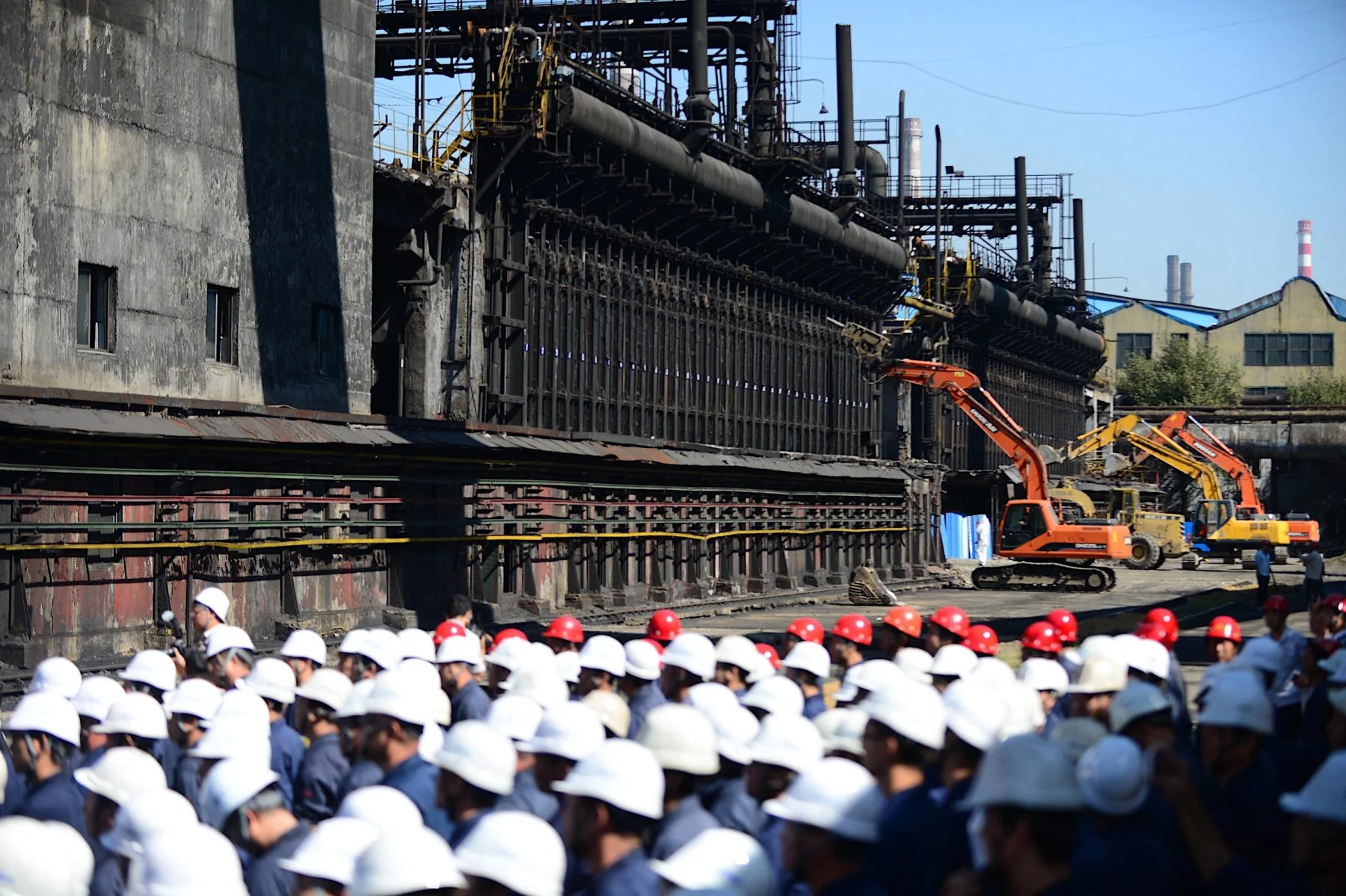
Policymakers are looking beyond industrial upgrades, creating favourable conditions for newer, greener steelmaking routes.
Introduction
China’s industry ministry has unveiled new rules on replacing steel production capacity. The changes, which end a nearly two-year suspension of new approvals, represent the most significant overhaul of the policy since 2021. National steel policy has, since 2014, sought to control overall capacity and encourage upgrades by requiring the retirement of older capacity before new facilities can be built.
The revised measures, announced on May 18, mean even more capacity must be retired before new capacity is added. They also tighten eligibility requirements and place new restrictions on the use of dormant capacity.
The changes come at a pivotal moment for China’s steel industry. After a decade of restructuring and upgrading, the sector is facing slower demand growth, weak profitability, and mounting pressure to reduce emissions. Steelmaking remains responsible for around 16% of national carbon emissions and is one of the toughest industries to decarbonise.
Therefore, the latest reforms raise a broader question: can a policy originally designed to manage capacity also help accelerate the steel sector’s low-carbon transition?
A Decade of Steel Policy Evolution
China’s capacity replacement has evolved over the past decade from a mechanism to manage industrial capacity into a broader policy tool supporting industrial upgrade, environmental improvement, and, increasingly, decarbonisation. The mechanism emerged from two major policy priorities that took shape in 2013: efforts to tackle severe industrial overcapacity and a growing national campaign to improve air quality.
When the first steel capacity replacement rules were introduced in 2014, they required an amount of existing capacity—ideally older and more polluting assets—to be shuttered before new capacity could be built. In key air-pollution control regions, the ratio was 1.25 tonnes retired for every 1 tonne added. Everywhere else it was 1:1.
Over the following decade, the policy evolved alongside China’s environmental and climate ambitions. The 2017 revision, for the first time, introduced preferential treatment for replacements with electric arc furnace (EAF) steelmaking. These are less polluting and less carbon-intensive than the blast furnace-basic oxygen furnace (BF-BOF) route, which today still accounts for around 90% of Chinese steel production.
Following China’s 2020 pledge to peak its carbon emissions before 2030 and be carbon neutral before 2060, the 2021 revision incorporated more explicit climate objectives. It further tightened replacement requirements in an expanded group of air-pollution control regions.
The 2026 Revision: A Step Further
The latest 2026 revision goes further still. It generally requires 1.5 tonnes of existing capacity to be retired before a tonne of new capacity can proceed, up from 1.25. It excludes the counting of long-idled capacity as a replaceable asset, restricts the transfer and trading of capacity quotas across regions and companies, and provides more explicit support for EAF and hydrogen-based steelmaking.
However, although the share of EAF projects increased over time, BF-BOF projects continued to dominate approved capacity additions. This shows the continued dominance of coal-based production. The distinction between industrial upgrading and decarbonisation lies at the heart of the debate over the capacity replacement policy.
Why Upgrades Did Not Equal Decarbonisation
Why didn’t the gradual greening of the capacity replacement policy translate into deep emissions reductions? The impact was constrained by the structure of China’s steel industry and the incentives facing policymakers and producers.
Most new capacity launched since the policy’s inception has continued to rely on the blast furnace-BOF route. Although newer facilities are generally more energy efficient and less polluting than what they replace, they still depend heavily on coal.
A second challenge lies in the relationship between capacity and output. Some replacement projects retired facilities that had been underused, or even idle for years. Newer plants were often more productive than the assets they replaced. Therefore nominal capacity reductions did not always translate into lower production or emissions.
The policy also reflected competing priorities among stakeholders. While the central government increasingly viewed capacity replacement as a tool for pollution control and decarbonisation, local governments often prioritised investment and employment. As a result, capacity replacement proved more effective at modernising facilities than driving structural decarbonisation.
Why Were the Rules Tightened in 2026?
The 2026 revision, issued after a nearly two-year suspension, reflects both lessons from a decade of policy implementation and the changing realities facing China’s steel industry. After a decade of restructuring, the sector is entering a period of weakening demand, thin margins, and rising trade frictions linked to record-high steel exports.
In this new environment, policymakers are increasingly concerned not only with how capacity is upgraded, but also with whether existing capacity can exit the system in a credible and orderly way. One priority was to improve the credibility of capacity reduction. As well as upping the standard capacity replacement ratio to 1:1.5, the new rules also exclude long-idled facilities from replacement calculations. The revised framework also tightens restrictions on the buying and selling of retirement quotas.
At the same time, the 2026 policy provides more explicit support for lower-carbon technologies, offering clearer guidance for hydrogen-based steelmaking technologies. Over the past three years, large-scale hydrogen metallurgy projects have moved beyond the pilot stage and begun generating operational experience.
Can New Rules Accelerate Steel Decarbonisation?
The revised capacity replacement framework could help create more favourable conditions for steel decarbonisation. The tightened capacity-reduction requirements and restricted eligibility of idle assets make it more difficult for high-carbon capacity to remain in the system indefinitely. Clearer support for EAF and hydrogen-based steelmaking also sends a stronger signal about the direction of future investment.
Yet capacity policy alone is unlikely to drive a rapid transition. The steel sector continues to face weak demand, low profitability, and uncertainty over future investment returns. Low-carbon technologies remain more expensive than conventional options, while demand for green steel is still limited.
This helps explain why progress has been slower than policymakers had initially hoped. Despite years of policy support, EAF steel’s share of crude steel production has remained around 10% in recent years, well below the 15% target set for 2025. The challenge is no longer simply technological, but increasingly one of economic viability and scale.
Future Outlook
Ultimately, capacity replacement is likely to play a supporting rather than decisive role in the sector’s transition. The expansion of China’s national carbon market, the development of green steel standards and certification systems, and new efforts to green industrial supply chains may prove just as important in creating demand for green steel.
In 2025, China’s State-owned Assets Supervision and Administration Commission (SASAC) issued guidelines encouraging central-state-owned enterprises to build green and low-carbon supply chains. Such green procurement can help reduce the commercial risks associated with low-carbon investments by providing more stable demand signals for suppliers, including steel producers.
Viewed in this context, the 2026 reforms are best understood not as a standalone solution, but as part of a broader shift in China’s steel transition. Research estimates that around 350 million tonnes of blast furnace capacity may need to be retired by 2030 to support the sector’s decarbonisation pathway. Whether that transition can be achieved will depend not only on stricter capacity management but also on the development of technologies, markets, and policy incentives that enable lower-carbon steelmaking to scale.
Source: Article by Shen Xinyi, Researcher at the Centre for Research on Energy and Clean Air, published in Dialogue Earth – June 2026

