

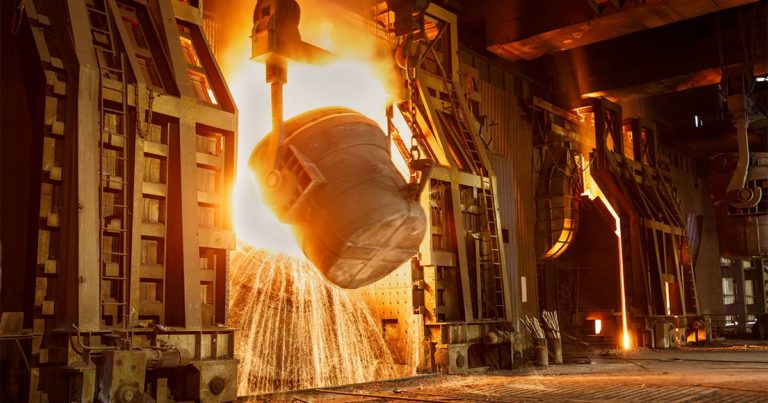
Steel is primarily produced using one of two methods: blast furnace or electric arc furnace.
The blast furnace is the first step in producing steel from iron ores. The first blast furnace appeared in the 14th century and produced one ton per day. Even though equipment has improved and higher production rates have been achieved, the processes inside the blast furnace remain the same. The blast furnace uses coke, iron ore, and limestone to produce pig iron.
Coal has traditionally been an important part of the coke production process. Coal is crushed and powdered, then placed in a furnace where it is heated to 1800°F in the absence of oxygen. As the furnace heats up, the coal begins to melt, removing most volatile materials such as oil, tar, hydrogen, nitrogen, and sulfur. The cooked coal, called coke, is removed from the furnace after 18 to 24 hours of reaction time. The coke is cooled and sieved into pieces ranging from one inch to four inches. Coke is a hard, porous black rock made of dense carbon (containing 90 to 93 percent carbon), with some ash and sulfur. Compared to raw coal, coke is much stronger. The strong coke pieces, with high energy value, permeability, heat, and gases, are essential for reducing and melting iron ore, pellets, and sinter. Today, natural gas is increasingly added instead of coke in the blast furnace to reduce carbon emissions.
The first electric arc furnaces (EAFs) appeared in the late 19th century. The use of EAFs has expanded, and they now account for more than 70% of steel production in the United States. The EAF differs from the blast furnace because it uses an electric current to melt scrap steel, direct reduced iron, and/or pig iron to produce molten steel.
