

Introduction
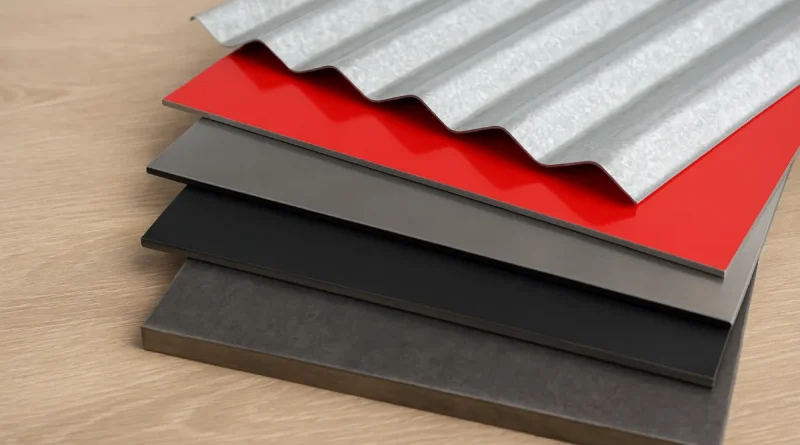
Steel sheets are among the most widely used steel products, playing a vital role in various industries including construction, automotive, home appliances, and shipbuilding. The wide variety of steel sheets—including black, cold-rolled, galvanized, color-coated, checkered, stainless steel, and more—makes proper selection a critical challenge for engineers and industry professionals. In this article, we provide a detailed review of the advantages and disadvantages of each type of steel sheet, offering practical guidance to help you choose the best option for your specific project needs.
Types of Steel Sheets and Their Key Applications
Black Steel Sheet (Hot Rolled): Produced through hot rolling, this sheet has a relatively rough and dark surface. Due to its high strength and cost-effectiveness, it is widely used in steel structures, storage tanks, automotive industries, and heavy industrial components.
Cold Rolled Steel Sheet: Manufactured through cold rolling, this sheet features a smooth, bright surface with high dimensional accuracy. It is ideal for automotive industries, home appliances, precision parts, and structures requiring a uniform appearance.
Galvanized Steel Sheet: Steel sheet coated with a layer of zinc (Zn) to resist rust and corrosion. Used in construction, roofing, facades, pipe production, ventilation ducts, and automotive parts.
Color-Coated Steel Sheet: Galvanized steel sheet with a durable color coating, offering both protection and aesthetic appeal. Used in building facades, roofing, interior decoration, and decorative metal products.
Pickled Steel Sheet: Hot-rolled steel that has been acid-pickled to remove rust and surface impurities, resulting in a cleaner, smoother surface. Used in automotive industries, tank production, home appliances, and industrial parts requiring surface preparation for painting.
Tinplate Steel Sheet: Steel sheet coated with a thin layer of tin, offering high corrosion resistance. Used in food packaging, cans, and kitchenware.
Checkered Steel Sheet: Steel sheet with a raised patterned surface to increase slip resistance and safety. Used in industrial flooring, stairs, ramps, and anti-slip structures.
Stainless Steel Sheet: Steel sheet with high chromium and nickel content, offering exceptional resistance to rust and corrosion. Used in food and pharmaceutical industries, medical equipment, kitchenware, interior decoration, and marine structures.
Advantages and Disadvantages of Steel Sheet Types
Black Steel Sheet
-
Advantages: High strength, cost-effective, good formability and weldability
-
Disadvantages: Rough surface, low corrosion resistance, requires protective coating in humid environments
Cold Rolled Steel Sheet
-
Advantages: Smooth and bright surface, high dimensional accuracy, excellent formability, high paintability
-
Disadvantages: Higher cost than black sheet, lower corrosion resistance, requires maintenance and protective coating
Galvanized Steel Sheet
-
Advantages: Excellent corrosion resistance, long lifespan, low maintenance, good performance in various weather conditions
-
Disadvantages: Vulnerable to high heat, limited weldability, higher cost
Color-Coated Steel Sheet
-
Advantages: High corrosion resistance (due to galvanized base), attractive appearance, color variety, easy installation
-
Disadvantages: Potential for fading or peeling in harsh weather, higher cost than plain galvanized sheet
Pickled Steel Sheet
-
Advantages: Smooth and clean surface, quick preparation for painting, reasonable cost
-
Disadvantages: Lower corrosion resistance than galvanized sheet, requires protective coating in humid environments
Tinplate Steel Sheet
-
Advantages: Excellent corrosion resistance, safe and hygienic for food packaging, good weldability and formability
-
Disadvantages: Sensitive to impact and scratches, higher cost, coating damage at high temperatures
Checkered Steel Sheet
-
Advantages: Anti-slip surface, high safety in industrial environments, good resistance to pressure and wear
-
Disadvantages: Higher production and cutting costs, more difficult to clean and maintain
Stainless Steel Sheet
-
Advantages: Exceptional resistance to rust, corrosion, and heat, long durability, attractive appearance, easy maintenance
-
Disadvantages: High cost, difficult machining and welding in some grades, risk of galvanic corrosion when in contact with other metals
General Comparison Table of Steel Sheets
| Sheet Type | Advantages | Disadvantages |
|---|---|---|
| Black (Hot Rolled) | Good price, high strength, good weldability | Rough surface, fast rusting, lower dimensional accuracy |
| Cold Rolled | Smooth/bright surface, precise dimensions, high paintability | Higher cost, lower corrosion resistance |
| Galvanized | Rust-resistant, long lifespan | Lower hardness, more difficult welding/painting |
| Stainless Steel | Corrosion-resistant, beautiful appearance, long life | High cost, harder formability, requires special tools |
| Color-Coated | Attractive appearance, color variety, better corrosion resistance | Higher cost, limitations in welding and precision cutting |
| Checkered | Anti-slip surface, high safety, wear-resistant | Higher production and cutting costs, more difficult maintenance |
Application-Based Selection Guide
Construction: Black steel sheet is ideal for steel structures due to high strength and cost-effectiveness, while checkered sheet is perfect for flooring and stairs.
Home Appliances: Cold-rolled sheet with smooth surface and high precision is used for main bodies, while color-coated sheet offers aesthetic appeal for finished products.
Food Industry: Tinplate is ideal for can packaging, and stainless steel is perfect for industrial equipment and kitchenware.
Automotive Industry: Cold-rolled sheet is used for bodies and interior parts, while galvanized sheet is used for exterior parts exposed to moisture and corrosion.
Industrial Sheds and Structures: Galvanized sheet is suitable for roof and wall coverings, while black sheet is used for steel frames and load-bearing structures.
Common Mistakes in Steel Sheet Selection
Buying Based Only on Price: Choosing the cheapest option may lead to hidden costs such as additional coating, early repairs, and reduced lifespan. Always prioritize quality and technical specifications.
Ignoring Environmental Conditions: Overlooking factors like humidity, chemicals, and corrosive vapors is a major mistake. For humid environments, galvanized or stainless steel is recommended; for acidic environments, special alloys like 316 stainless steel are necessary.
Choosing Inappropriate Sheet for Specific Applications: Each industry requires specific properties. For example, using black steel sheet in the food industry is entirely wrong due to its lack of corrosion resistance.
Conclusion
Steel sheets offer a wide variety of types with unique properties, making proper selection a matter of knowledge and awareness. Balancing price, quality, and application is the key to optimal selection. By considering environmental conditions, project requirements, and budget, you can choose the best option and avoid unnecessary costs and reduced structural quality. For current prices and reliable purchasing, contact Ahansad experts.

