

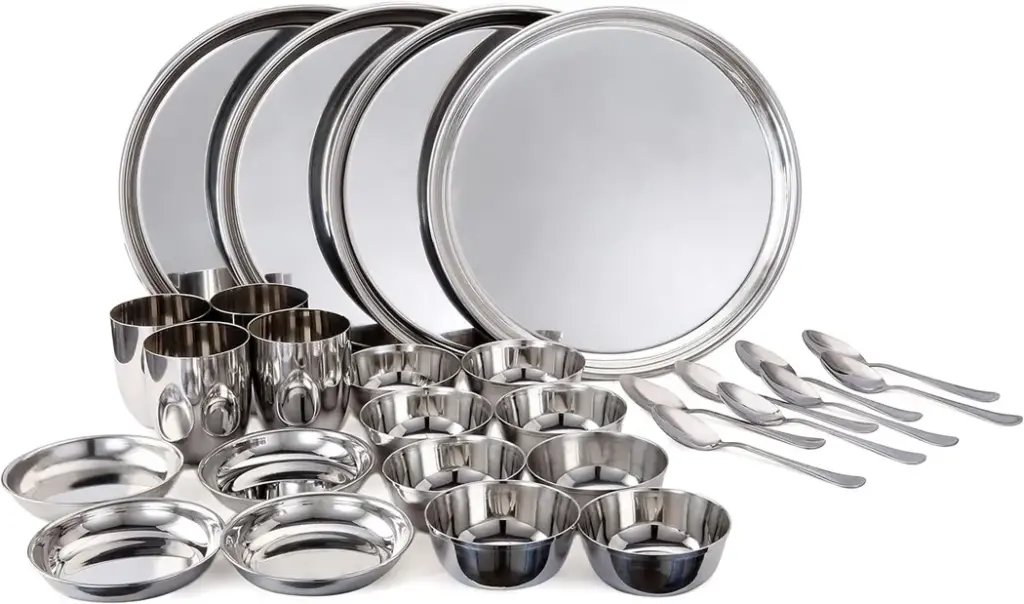
Stainless steel sheets and utensils are widely used in homes and kitchens due to their high corrosion resistance and aesthetic appeal. Over time and repeated use, the original shine of these surfaces diminishes, and stains, deposits, or cloudiness may appear. This article presents simple and effective solutions for restoring the brightness and cleanliness of steel utensils and surfaces.
Home Methods for Polishing Steel
Using Baking Soda and Warm Water
Baking soda (sodium bicarbonate) is one of the most effective natural materials for cleaning and polishing steel surfaces. Mix some baking soda with warm water to form a thick paste. Apply this paste to the steel surface and gently rub in circular motions. Then rinse with lukewarm water and dry with a soft, dry cloth.
White Vinegar; Natural Cleaner
White vinegar, due to its mild acidic properties, can remove limescale deposits and water stains from steel. Pour vinegar into a spray bottle and spray directly onto the steel surface. Wait a few minutes for the vinegar to penetrate and dissolve the stains, then rinse with water and dry with a towel. For better results, you can combine vinegar with some baking soda.
Olive Oil for Extra Shine
After thoroughly cleaning the steel surface, you can pour a few drops of olive oil onto a soft cloth and gently rub it on the surface. This method creates a thin protective layer and gives steel an extraordinary shine. Be careful not to use too much oil to avoid a greasy surface.
Polishing Steel Spoons and Forks
Steel spoons and forks become dull with repeated use and lose their luster. To polish them, prepare a container of hot water and add one tablespoon of baking soda and half a cup of white vinegar. Soak the spoons and forks in this solution for 15 to 20 minutes. Then wash them with a soft sponge, rinse, and dry completely. This method removes surface deposits and restores original brightness.
Polishing Steel Kitchen Sinks
Kitchen sinks become stained quickly due to constant contact with water, detergents, and food. To polish the sink, first wash it with water and dish soap and rinse thoroughly. Then sprinkle some baking soda directly on the sink surface and rub with a damp sponge in circular motions.
After washing completely, spray white vinegar on the sink and wait a few minutes. This removes limescale deposits. Finally, wash the sink with lukewarm water and dry with a towel. To prevent water stains, always dry the sink after use.
Polishing Steel Pots
Steel pots may suffer from burning or discoloration due to exposure to high heat and food. To fix these problems, fill the pot with water and add two tablespoons of baking soda. Place the pot on heat and boil for 10 minutes. Then empty it and scrub with a soft sponge.
For stubborn stains, you can apply baking soda and water paste directly to the stain and leave for a few hours. Then scrub with a sponge and wash. For final shine, use olive oil or special steel polish cream.
Important Tips for Cleaning and Polishing Steel Utensils
- Never use steel wool or hard abrasive pads; these materials scratch the steel surface.
- Always move in the direction of the natural lines and grain of the steel surface.
- After each wash, dry the surface completely to prevent water stains.
- Avoid detergents containing chlorine or ammonia; these can damage the steel surface.
- To maintain long-lasting shine, polish steel surfaces once a month with olive oil or special cream.
Proper use and regular maintenance increase the lifespan of steel utensils and surfaces while preserving their beauty

