

The global steel industry is one of the most carbon-intensive industrial sectors. Responsible for approximately 7–9 percent of global CO₂ emissions, steelmaking represents a significant challenge—and an equally important opportunity—in the global pursuit of net-zero emissions. As governments, companies, and industries move toward more ambitious climate commitments, Carbon Capture, Utilization, and Storage (CCUS) is increasingly recognized as a pivotal strategy for decarbonizing steel production. CCUS technologies offer a pathway to significantly reduce emissions from existing steel plants, complement emerging green steel technologies, and accelerate the transition toward a low-carbon industrial future.
The Decarbonization Challenge in Steel Manufacturing
Steel production relies heavily on fossil fuels—especially coal—in both blast furnace–basic oxygen furnace (BF-BOF) routes and in high-temperature processes. This reliance makes deep decarbonization difficult. While new technologies like hydrogen-based direct reduced iron (H₂-DRI) and electric arc furnaces (EAF) powered by renewable energy show great promise, they are not yet available at the scale, cost, or infrastructure required for global adoption. Moreover, a significant proportion of the world’s steel assets are relatively young, meaning they will remain operational for decades. For these plants, CCUS is an essential transitional solution.
How CCUS Works in the Steel Sector
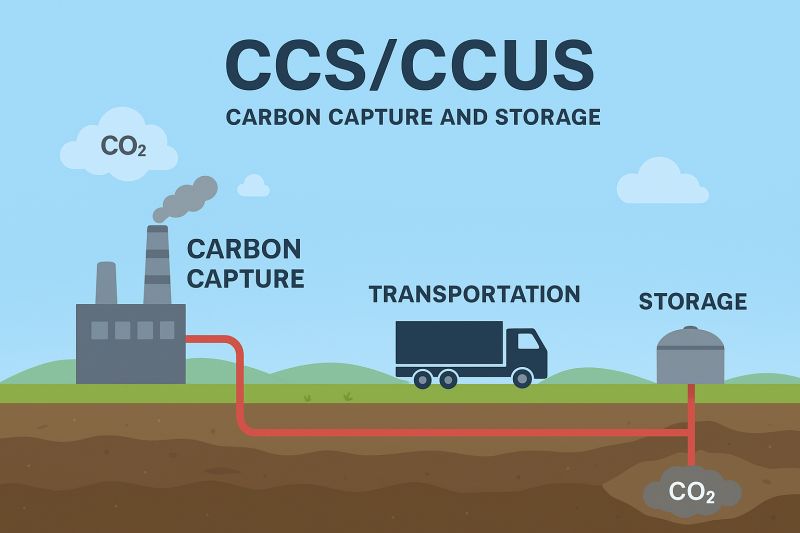
CCUS involves three interconnected steps:
- Carbon Capture: CO₂ generated during steel production is separated from gas streams using chemical solvents, membranes, or adsorption technologies.
- Utilization: Captured CO₂ can be converted into valuable products such as building materials, synthetic fuels, or chemical feedstocks, creating circular carbon pathways.
- Storage: CO₂ can be safely stored deep underground in geological formations, preventing it from entering the atmosphere.
In steelmaking, CO₂ is emitted from both process reactions and fuel combustion. CCUS technologies can be integrated into blast furnaces, power boilers, and direct reduced iron units, capturing between 50–95 percent of total emissions depending on the system design and capture efficiency.
Why CCUS Is Critical for the Steel Industry
- Reducing Emissions from Existing Assets
The majority of steel produced globally comes from BF-BOF plants that rely on traditional carbon-based processes. Replacing them entirely with hydrogen-based or electric alternatives is both costly and time-consuming. CCUS provides a viable way to retrofit these existing assets, allowing them to significantly cut emissions while extending operational lifespan.
- Supporting a Just and Orderly Transition
The global steel supply chain supports millions of jobs. Rapid shutdowns or technology shifts could disrupt economies and communities. CCUS offers a balanced pathway that allows companies to reduce emissions without compromising employment or industrial productivity.
- Complementing Emerging Green Technologies
CCUS is not a competitor to green hydrogen or renewable-powered EAFs—it complements them. While hydrogen-based routes will play a major role in the future, CCUS remains the only scalable solution for decarbonizing traditional production routes during the transition period.
- Enabling Low-Carbon Steel Markets
Corporate demand for low-carbon materials is rising across sectors such as construction, automotive, and consumer goods. CCUS-enabled steel helps manufacturers access cleaner supply chains and supports the development of certified low-carbon steel products.
Opportunities for CO₂ Utilization
Utilization pathways transform captured CO₂ into value-added materials, turning emissions into economic opportunity. For the steel sector, key utilization options include:
- Mineralization: Reacting CO₂ with steel slag or other industrial residues to create stable, carbon-rich construction materials.
- Synthetic Fuels: Converting CO₂ into methanol, aviation fuels, or industrial chemicals when combined with green hydrogen.
- Carbon-based Polymers and Chemicals: Producing materials with lower carbon footprints to support circular manufacturing.
These pathways can reduce lifecycle emissions while creating new revenue streams for steel producers.
Key Challenges and Considerations
Despite its potential, CCUS adoption in the steel sector faces several challenges:
- High Capital and Operational Costs: Capture technologies require significant investment and ongoing energy consumption.
- Infrastructure Needs: CO₂ transport pipelines, storage sites, and industrial clusters are essential for large-scale deployment.
- Regulatory and Policy Support: Clear frameworks, incentives, and carbon pricing mechanisms are crucial to making CCUS economically viable.
- Public Acceptance: Community awareness, transparency, and trust in geological storage sites must be cultivated.
Overcoming these challenges requires coordinated action from governments, industry, financial institutions, and technology providers.
The Path Forward
To achieve meaningful decarbonization, the steel industry must adopt a portfolio of solutions. CCUS stands out as one of the most impactful near-term strategies for reducing industrial emissions. Investments in pilot projects, industrial clusters, cross-border CO₂ transport networks, and supportive policy frameworks are already accelerating global deployment.
As the world moves toward net-zero pathways, CCUS will remain a crucial tool for ensuring that steel—one of the foundations of modern civilization—can continue to be produced sustainably, competitively, and responsibly.

